Showing posts with label Classics Challenge 2010. Show all posts

Monday, 6 September 2010

The Strange Case of Dr. Jekyll and Mr. Hyde by Robert Louis Stevenson

The Strange Case Of Dr. Jekyll And Mr. Hyde
This is another one of those books we’ve all heard of but few people have actually read. As a result, people often have the impression they know what the book is about, but don’t actually because much of the story has been dramatized and Hollywoodized over the years. I don’t actually mean that as a criticism even if it does sound like one. It’s brilliant that people can take an idea and expound on it to create other stories and I wouldn’t want to give up our Mr. Hyde of today, or our green Frankenstein, or our Coca-Cola Santa Claus. It’s just that often the successors wind up overshadowing the original to the point where it almost disappears except to the few who choose to look at the origins. Granted, there still are a lot of people out there who have read the originals, but the average person hasn’t.

Dr. Henry Jekyll has gone a bit soft in the head. He shuns visitors, changes his will in an odd manner leaving all to Mr. Hyde should he die or disappear, and his friends are becoming increasingly worried. Most of all they are concerned about his connections with the man Mr. Hyde who is seen running down a small girl in the street. Mr. Hyde gives a check signed in Jekyll’s name to the father in the way of compensation, but doesn’t show much remorse. Jekyll swears afterward that he is finished with Hyde, but when Jekyll’s friends find his cane at Hyde’s house, they know he’s still under Hyde’s influence and soon they find out that the truth is even more horrible than they had imagined.

It won’t be giving anything away to mention that Jekyll and Hyde are one in the same. Hyde is the creator of a potion which changes him into a being free from moral subjugation and Jekyll revels in the freedom this gives him at first. However, like most addictive substances, it soon takes over his life and his free choice is removed so that he is subjugated to the beast he has created. Here’s where “fact” and fiction separate though. Hyde is often portrayed as a larger than life figure with great strength and power. However, in the book, Jekyll is the larger of the two men and Hyde much the smaller, more crude looking figure with no particular powers except his lack of morals which allows him to do things forbidden to most humans. Stevenson also doesn’t present the case from Jekyll/Hyde’s point of view, instead choosing to tell the tale through the rather clinical and Victorian observation of his friends. This lends the book a bit of a dry air as opposed to making it a thriller. Thus, Stevenson wasn’t actually trying to create a monster for our Halloween pleasure, he was presenting us with the dichotomy of man vs. the monster within himself, or what we would be without voluntary moral or ethical subjugation.

I think he also, perhaps unknowingly addresses the subject of addiction and its ends. As mentioned, the potion becomes the master of the man until the effect is no longer the one desired, and instead reflects the essence of the potion which is evil. Many drugs have the same effect of being pleasurable in the beginning, but soon grow to control the user instead of the user controlling the drug. Finally, he also, rather obviously, addresses split personalities and mental illness. Jekyll and Hyde being one and the same makes that pretty much a given. Although, to his credit, Stevenson doesn’t make the split black and white, as Jekyll tells his friends, while Hyde was wholly amoral, this did not make Jekyll his diametric opposite and render him wholly good. Jekyll remained much as he was while Hyde only embodied the evil in him. Thus, it was less of a split than a personality graft, like cutting off one pit of a plant so that it grows into its own plant, only this particular bit only contained certain parts of the makeup of its parent plant. In essence, this is a more accurate reflection of mental illness as it is seldom comprised of a simple black and white split.

I could babble on about this forever because it is a terribly interesting book which opens up a lot of room for discussion. Yes, it is a bit on the dry side as a read, especially if you’re expecting fast paced action, but the subject matter makes up for that in leaps and bounds. It’s one I can recommend to anyone, so it’s another 5/5 book.

Monday, 26 July 2010

The Memoires or Sherlock Holmes by Sir Arthur Conan Doyle

The Memoires or Sherlock Holmes is a collection of short tales about the feats of Sherlock Holmes written in the form of Memoires by his ever faithful sidekick Dr. Watson. They give what purports to be the most interesting of Holmes’ cases, including his finale with Professor Moriarty and how Holmes came to his death. Fortunately for us, the readers of the day kicked up such a fuss about killing Holmes off, that Doyle resurrected him in The Adventures of Sherlock Holmes.

Having read both works recently, I can see why Doyle did what he did. First of all, there really is no other suitable death for Holmes because his character simply isn’t one that would grow old contentedly. Imagine a old, decrepit Holmes unable to go about his business chasing after criminals. He’s not particularly stable at the best of times, but inactivity would send him over the brink. Death by and with Moriarty was the best possible scenario in my opinion. However, Doyle was a bit premature with killing off his character and was forced to bring him back from the grave so to speak. Since Moriarty really was dead, that particular scenario couldn’t happen twice (that would have been cheesy anyway). I

I can also see why he was so eager to kill off Holmes. The more you read, the more similarities you start to see between the cases and they becoming increasingly easier to solve yourself, or at least to imagine where Doyle will take the reader. I think Doyle might have been afraid that he would become stale and tried to do what so many others before him should have done, i.e. quit while he was ahead.

I’m not saying I didn’t enjoy the book, because I did, it’s only that I can see Doyle’s reasoning. 5 out of 5 for this lot because how could you give Holmes any less!

Thursday, 15 July 2010

The French Lieutenant’s Woman by John Fowels

Figuring I needed to get myself out of my wallow in crime and YA literature, I decided I needed to read a classic and went with The French Lieutenant’s Woman as a cross between classic and future classic; it’s not quite a heavy book, but not a light read either.

Sarah Woodruff is a woman jilted in love, or is she? She can be seen pining day after day on the Cobb in Lyme Regis staring out to sea apparently after her French lover whom she nursed during his recovery from an injury sustained in a shipwreck, but who left her as soon as he’d recovered. She is penniless and alone and the society of the time would have condemned her to the life of an outcast for her “crimes”, but through the charity and kindness of others, finds a place as a lady’s companion. Mrs. Poulteney takes Sarah in out of a need to prove her piety. Sarah accepts that she must suffer for her past indiscretions, at the same time refusing to divulge any details or even hint that she may feel penitent. She lives her life seemingly without hope for improvement or thought of the future, often refusing to take advantage of offers of assistance given to her. The only comfort she does allow herself is the confidence of Charles, who is affianced to Ernestina, a wealthy woman of the rising classes. Charles and Sarah enter into a relationship which may lead to both their ruin.

This book is destined to become a classic, or already is one despite its relatively recent publishing date. It was written in 1969 but takes place in Victorian England. It’s written from the point of an omniscient narrator who provides insights and commentary into both today’s society, i.e. that of 1969, and Victorian society, often offering praises and critique of both. He imparts not only the character’s feelings, but the reasons behind those feelings as well. Victorian England can often be a complicated and incomprehensible world for modern society as it’s based on many rules and regulations which often seem to have no logical derivation even though they are obviously motivated by Religion an purity of soul.

That Sarah is based on Tess of the D’Urbervilles is obvious to anyone who has read the latter. Fowles not only includes many quotes and references to Hardy, but Sarah, at least on the surface, is really just a clone of Tess, who also feels the constant need for penitence and punishment. The twist is that Fowles includes Doctor Grogan in his story who offers another possible interpretation to Sarah, namely that of a maniacal, twisted woman who is out to manipulate others to her own benefit. He changes Charles perspective and forces him to confront his feelings and opinions. Fowles also offers the reader several scenarios within his own book, all of which are possible and believable. He forces the reader into thinking about which ending he would chose for the characters. I won’t give my choice away because it would ruin the story for anyone who hasn’t read it. Besides, that would just lead me to spending an age discussing all the variants.

It’s an interesting read and well worth it. The modern commentary and the twists Fowles introduced kept it from being as gloomy and doomy as Tess and Hardy are, thus making it the more pleasant read. I now understand what all the fuss was about. 5 out of 5.

Tuesday, 6 July 2010

Under the Greenwood Tree by Thomas Hardy

I know, I know, I know! I keep swearing I won’t read anymore Hardy, except for Jude the Obscure, and then I keep doing it anyway. What can I say, the mini-series was good and it was on sale, so I thought I’d give it a whirl in the hopes that Hardy took a happy pill like when he wrote Return of the Native.

Someone should have given the man a larger supply of happy pills. Seriously, Hardy can make a jovial party sound like a dirge.

Fancy Day returns to her native village to become the new school mistress. Dick Dewy falls in love with her at first sight and tries his best to make a good impression on her. Fancy likes Dick, but is hesitant to return his affections as she knows her father wants better for her. She is educated to a much higher standard than Dick and as such, her father meant her to rise in the world instead of remain where she was born. Nonetheless, she is attached to Dick. When she receives proposals from both Dick and the new vicar, she is at a loss as to what to do. Meanwhile, the village is undergoing a struggle between the musicians, who have always provided music for the church services, and the new vicar, who would like to replace them with an organ, played by Fancy Day.

There’s not really a whole lot to this story, and frankly, the mini-series was better. They fleshed the story out a bit and made Fanny less wishy-washy and better able to stand on her own. They also left out the melancholic note that Hardy manages to let seep into all of his works. It gives the story a happier air, even though not everyone in it is a winner. All in all, it was so-so. If you’re looking for a quick introduction to Hardy, this is probably a good place to start. Still, it’s definitely not the best of his work. 3 out of 5.

Wednesday, 30 June 2010

The Prime of Miss Jean Brodie by Muriel Spark

The Prime of Miss Jean Brodie tells the tale of an innovative and very different teacher at a girl’s school in 1930’s Edinburgh. Miss Jean Brodie chooses to dismiss the standard classroom exercises, along with the classroom itself, in favour of real knowledge garnered from a life lived with the intention of ever improving the mind. She takes her classes outdoors and tells them of her life, her loves, her passion for art and of her extensive travel in Europe, occasionally asking them to repeat certain parts of the lesson so as to relate them to the standard curriculum. She invites the class to teas and takes them on unconventional excursions, leading them through part of Edinburgh they would not otherwise see, i.e. the impoverished sectors. As she does so, the students learn not only of art, but of life and its many facets. Miss Mackay, the headmistress of the school, doesn’t care for Miss Brodie or her methods and repeatedly tries to catch her out so she can dismiss her, but Miss Brodie’s success with the girls prevents her from being able to do so.

After a while, the girls begin to stand out in the school and become known as the Brodie set, a mark which they never loose. The story also begins to drift more and more into the personal life of Miss Brodie as she makes the girls into her friends and not just pupils. This, as is repeatedly is mention in the flash forwards, turns out to be her downfall as one of her pupils betrays her. Even when the girls go on to other classes and forms and Miss Brodie herself teaches new students, this particular set of girls continues to play a pivotal role in Miss Brodie’s life.

Superficially, this book is a quick and good read, but it offers a lot of food for thought if you care to think about it. Miss Jean Brodie, who constantly professes to be in her prime, is a passionate, somewhat unorthodox woman with deep undercurrents of malcontent and disappointment. She loves where she cannot and cannot return love where she should. She wants to keep her pupils from becoming boxed in as society would have it and free them to widen their horizons. In some ways, it’s quite reminiscent of the Bloomsbury School, even though it’s being written decades later. Unfortunately for Miss Brodie, she also possesses a naïveté which she uses as a buffer against the real world. It’s almost as if she knows, but ignores, that the world is a much harder place than she feels it should be. If she consequently disregards the inconvenient truths of life, in part by romanticising everything she sees and hears, they will not affect her. It’s as though she believes that her convictions will materialize if she simply believes in them long enough and hard enough. She is trying to shape the world through will instead of pragmatism. It is this forced ignorance of reality, or romanticism, that finally leads to her betrayal as she is finally incapable of seeing things how they are instead of how she would like them to be.

My first impression of the book was to chalk it up onto my “have read” list and relegate it to the back shelf. It turned out to be a bit more difficult than that. Somehow it’s worked itself into my subconscious and keeps popping up at the most unexpected times with an analogy or a sudden flash of understanding about what Spark intended. It’s almost like it’s haunting me and challenging me to think, as Miss Brodie was trying to do for her pupils. In my opinion, that’s one of the things that makes a book great and I can now understand what all the fuss is about with this one. 5 out of 5. A must read.

Sunday, 27 June 2010

A Wind in the Door by Madeleine L’Engle

Meg Murry’s little brother Calvin isn’t well. Meg’s mother, an important biologist, believes his mitochondria might be ill, but doesn’t know how to fix it. Charles is also being bullied at school because he doesn’t fit in. Meg is frustrated with her lack of ability to help Charles on either front, even thought Charles knows himself that he must learn to adapt. Then Charles begins to see things. He tells Meg he’s seen a dragon in the garden, which she at first does not believe, but when they find one of it’s feathers, Meg begins to see that another fight between good and evil is inevitable. Once again, Meg must find the will to grow and become wiser while committing herself to fighting the darkness which is beginning to surround and overtake the earth.

This was another of my favourites as a child. I loved all of the Wrinkle in Time books back then, which is why I’ve got back to them in my old age I suppose. I have to admit that I was a little disappointed with the character growth in this one. As with A Wrinkle in Time, the focus is on Meg’s shortcomings and although she should have learned quite a bit in the first book, she seems to be right back where she started in this one. I would have expected more of her. However, that’s my opinion when reading it as an adult. As a child I remember having much more understanding for Meg and thinking she was thoroughly justified in her self-doubts and obstinacy.

The references to Christianity were less noticeable in this second book, but the fight between good and evil was still there in full force. The children must face, and fight, things they don’t understand and resist the urge to remain stagnate while the world goes on without them. It’s a good metaphor for life, either Christian or non- Christian. There will always be things we must choose to do or not to do even if we don’t fully understand them. The most difficult thing is to learn to chose the right thing despite that lack of understanding and the desire to do what’s easy. L’Engle does a good job at presenting this to children in a way they can understand.

A Wind in the Door is an excellent book I can recommend to anyone with children. 5 out of 5.

Monday, 21 June 2010

Crime and Punishment by Fyodor Dostoevsky

Once again, big thanks to Trish who hosts the Classics Challenge every year. I like reading classics, but because of the challenge, I read more than I might otherwise and I can challenge myself to read some I probably would never read without a bit of a push. Crime and Punishment definitely belongs to this last category. I have tried repeatedly read it but could never get past the horrible murder scene. I even once tried to watch the BBC adaptation, but, again, couldn’t get past the murder scene. I’ve always found the story disturbing and uncomfortable to read. The only thing that could make it any more disturbing is if I enjoyed reading it, because that would truly worry me.

Rodion Romanovich Raskolnikov is a young student in St. Petersburg who has dropped out of his courses and finds life difficult in all respects. At the beginning, he seems a little odd and slightly unstable. This quickly progresses to serious flirtation with insanity. He feels pressured from society, his family and himself in regards to finances and in the end talks himself into murdering an old pawnbroker and her sister, ostensibly to enable him to steal their fortune from them. He works himself up into quite a state in order to go through with it, so much so that he bungles the robbery, takes only a small amount of what was available and then uses none of it for his own benefit. Indeed his financial situation goes from bad to worse as the creditors move in and start to demand money from him. The stress of the robbery, his sister’s impending marriage to a man he feels is unworthy of her and the continual hounding by a policeman who suspects him of the murders but has no evidence weighs heavily on Raskolnikov in the following days. He becomes trapped in his own, no longer quite sane, mind and cannot judge how to act or react to the life which goes on around him. It’s as though he is living in a continual, delirious fever which makes him see life in a distorting mirror, completely preventing him from rational behaviour. He could pay his debts with the money he stole, but somehow doesn’t seem rational enough to do so. Even the money his mother borrowed to give to him goes on the funeral of a friend instead of towards his own comfort. Raskolnikov seems to be torn between his own social conscience, i.e. the need and goodness of helping other less fortunate people and his own need to survive. His initial intention was to steal to help himself, yet his conscience forces him to help others to the point of his own destitution.

Raskolnikov finally finds himself in a very difficult position. He knows they will never be able to prove he murdered and robbed the women, but neither can he stand the pressure. What to do? Dostoevsky compels the reader to ask himself what he would do himself in that situation. Knowing that the police would never be able to prove the slightest guilt seems to make the decision a given, but seeing Raskolnikov’s rapid decline forces the consideration of conscience and guilt. Would it really be so easy to ignore your own conscience or would it force you to yearn for penitence? After learning Raskolikov’s fate, it’s evident that Dostoevsky believes punishment is unavoidable. Either Raskolnikov will punish himself through his own conscience, or he will have to confess and receive formal punishment. It is also clear that Dostoevsky considers that (self) forgiveness and redemption can only be obtained through official punishment. The confession is necessary for true redemption of soul.

As I said, I found the whole book rather disturbing and uncomfortable. I suppose you could say that Dostoevsky achieved his goal by simply making the whole ordeal a worthless waste of life and sanity. That aside, I can see why this book is considered a classic and is still read today. Dostoevsky provides lots of material for discussion and food for thought with this work as despite the early 19th century setting, it still reflects modern social conflicts such as materialism vs. social conscience and the purposes or effectiveness of punishment. Did I like it? A resounding No to that. Did I find it a worthwhile read? Definitely, although I’m glad I won’t ever have to read it again. 5 out of 5 for being a great classic book.

Thursday, 17 June 2010

The Voyage Out by Virginia Woolf

Rachel Vinrace journeys out to South America on one of her father’s ships. It is her first foray into the world at large and she is overwhelmed by the impressions others leave upon her. As she meets more people with different views, she begins to see that there is more than just one way to look at life and that she mustn’t necessarily stick to the path others would choose for her. Her observations of other people open her eyes to the differences in the way people behave towards both strangers and their family and cause her to reflect on the rights and wrongs of social behaviour and the necessity of being open minded towards the attitudes of others. In short, it’s the journey of a young mind which is awakening to the world as a whole as opposed to a thing outside of one’s own small realm.

The Voyage Out is a psychological work as opposed to a classic novel. There’s less focus on the plot and more on description and thoughts of the characters. Woolf also uses the work to criticize the conventional lifestyle of the time and praise the choice of free thinking. The characters are often tedious and absurd, which Woolf uses to make her point. Offsetting the tedium is Woolf’s excellent writing style which flows along nicely, even through the tedium.

As a teenager or possibly into my early 20s, I would have adored this book. After all, it is about discovery of life and self and new ideas. Not having read it until I was well out of the age where much of life outside my own world was new, it served as a reminder of that time of my life rather than to expand my views. Much of it seemed a repeat of my own experiences and thus the work lost a lot of its shine for me. I found it quite difficult to concentrate on it, although I will admit that it may just not have been the time for me to read this novel. Perhaps I’ll pick it up again at a later date and see if I can’t get more out of it than I did this time. It is possible that I was just in the wrong mood for reading it, which is why I’m not going to rate the book. I’ll just say that if you’re not feeling like a good dose of introspection, you might want to leave it be until you are.

Sunday, 13 June 2010

A Wrinkle in Time by Madeleine L’Engle

Meg and her brother Charles are outsiders. Their parents are brilliant and their twin brothers normal, but Meg is a chronic underachiever and Charles, who is really a genius and empathetic to boot, is considered backwards because he didn’t develop speech until well after he should have. They just don’t seem to fit into their surroundings. Topping off their troubles is the mysterious disappearance of their father, whom the town assumes has run off with a younger woman, when in reality, he works for a top secret, scientific branch of the government and disappeared on duty. Then Mrs. Who, Mrs. Which and Mrs. Whatsit appear on the scene just after Meg meets Calvin, a popular boy from school who is a couple of grades ahead of her. Their little group seems to be the necessary constellation and the time has come for them to go and rescue their father from a far off world the children know nothing about. Their guides are the three women. They give the children a quick lesson in wrinkling time as a method of space travel and they are off in search of their father.

When you read a book at the age of 10 and pretty much remember the whole thing 30 years later, you know that book has got to be good. A Wrinkle in Time very much belongs in this category.

I recently picked up a new set of the series, my old set probably having been given away by my parents after I left the house, because I wanted to see if I could remember them and if they were still as good as they were when I was a child. Your perspective changes as you grow up and I thought maybe I’d find them silly, but I didn’t. Yes, they do seem a bit more one dimensional and the characters flatter than they did at the age of ten, but then L’engle wasn’t writing them for adults. As a kid I loved Meg and Calvin and Charles and felt I could relate to them. I can still see how this was, even though I now have a different perspective and can see their faults more clearly. I was also a bit shocked to realize that there’s quite a religious/Christian element to the books. That didn’t register with me back then, even though I did recognize the good vs. evil element. That might be because my younger self had more belief in Religion and took the references for granted. It might also be because I read the stories for the plot and didn’t spend to much time analysing them (maybe no time would be more exact). Even today, I feel that L’Engle put more weight on good vs. evil as opposed to making the books into a religious advertisement, so to speak. I thought that was well done.

Still, all these years later, it was a good read and I loved reading it again. It's not really old enough to be a classic, but I think it should be in a little classic category all by itself anyway, so I'm counting it towards the challenge. How you could give A Wrinkle in Time less than 5 out of 5 is beyond me.

Tuesday, 8 June 2010

The Mayor of Casterbridge by Thomas Hardy

Micheal Henchard wanders into a country fair with his wife and baby daughter and sits down in the furmenty tent to have supper. The tent’s landlord laces his furmenty with rum, Henchard gets drunk and sells his wife to a sailor by the name of Newson. When he wakes up in the morning, he realizes what he’s done, is dreadfully sorry and sets off to find them. Unable to do so, he swears off alcohol for the next 21 years and feeling that she might be better off with someone else anyway, settles down to make a life for himself alone in Casterbridge. Nearly 21 years later, having stuck to his vow of abstinence, he finds himself an upright citizen and Mayor of Casterbridge. Although the township knows there is something is his past he is deeply ashamed of, he’s very close with his information and lets them assume his wife has died. Unfortunately for him, his past catches up with him when his former wife and daughter return to find him after Newson’s death.

Sometimes I think Hardy could make the happiest of scenes sombre without even thinking about it. This book is no exception. The whole novel feels as if there’s a sheet of grey dullness pulled over it and no one who lives anywhere near his characters are ever happy, even when the laugh. His sobriety is why his novels are often better as televised dramas rather than read. OK, maybe not better, but at least easier to swallow.

His main character Henchard is a real rogue. Despite his feeling true remorse over his past deeds, he never learns from any of his failings. Instead, he chooses to find another person or even to blame his misfortune on. In this sense, he is a true forerunner of today’s society – always make someone else responsible. We see from the beginning that he blames the alcohol for his rash actions, but while he may never have done the same when he was sober, if you accept that alcohol only serves to lower our level of inhibition, than the sale of his wife is still a sign of evil that lurks in the bottom of the man’s soul. Later in the novel, he blames friends, family and business colleagues for the turn of his fortunes instead of owning up to his own mistakes. Had he taken the blame himself and thus given himself the opportunity to learn from his mistakes, he might have been able to stem the course of the tide and save himself.

That he has not learned from his first mistake is evident in just about every action he later takes. Instead of standing up to what he has done, he lies to cover it up, which leads to lie after lie after lie, and also sets up a pattern for all of his other dealings. Instead of learning to tell the truth and standing up for his failings, he continues to try and hide them, which just worsens his position. What’s truly sad about the story is that he does have quite deep feelings of sorrow and guilt for his wrong doings, but he allows his pride to overwhelm his remorse every time and thus continues on in the same self-destructive vein.

Perhaps his most fatal flaw is the deep jealousy he feels, which can be ignited by the silliest things. As soon as any man shows himself more adept at anything than himself, Henchard becomes terribly jealous. He then takes actions he later regrets and instead of later apologizing for his behaviour, he allows his pride to get the better of him and thus runs his friends and family off.

These flaws are the dominant theme of the novel and pretty much bury every other subject that might have arisen. It’s almost like a Bildungsroman in reverse since instead of developing his character, Henchard allows his own failings to swallow him up and isolate him from the rest of the world. It makes for very sombre reading and I was glad when it finally finished. Having said that, I still feel that it’s a good book, it’s just not a very uplifting one.

Rating: 3.5 out of 5, good but don’t read it when you’re depressed.

Tuesday, 1 June 2010

The Enchanted April by Elizabeth von Arnim

Thanks to Audible’s sales, I’ve found a new author. I’d never heard of Elizabeth von Arnim before, but the book was on sale, it looked like my sort of thing, so I bought it et voilà! I have a new author to read.

The Enchanted April tells the tale of four women as they vacation together in Italy in a secluded castle. The idea is formed by Mrs. Arbuthnot and Mrs. Wilkins who see an advertisement for castle in Italy which is to be let for the month of April. Mrs. Wilkins decides on the spur of the moment, that she would love to go, but cannot afford it herself. The scheme is hatched and the two women decide that they will do something for themselves for a change, rent the castle and go on vacation together. To further defray the costs, they advertise for a further two women to join them and thus Mrs. Fisher and Lady Dester join them on the holiday.

Each of these women is quite different from one another and as soon as they arrive they seem to get on one another’s nerves. As the days pass, they learn more about each other and more about themselves than they really expected to and the holiday turns into much more than any of them expected.

As mentioned, I got this one from Audible, so I listened to it. The narrator was pleasant and good (which is not always the same thing) and the story flowed well. It wasn’t really what I was expecting it to be, i.e. I misjudged the plot having made assumptions after having read the blub, so the plot development came as a bit of a surprise, although not an unpleasant one. It is a bit cheesy, but it’s an upbeat and happy story written in the 1920’s when women’s expectations were different, so I can forgive the cheesiness.

4 out of 5 for being a pleasant story and a good read.

Friday, 28 May 2010

The Name of the Rose by Umberto Eco

After having seen the film and hearing that the book was quite good, I decided to read The Name of the Rose for the Classics Challenge 2010 as my “Classic to be” book. Since it isn’t actually that old (the original Italian version was published in 1980), it’s not actually a classic, but I’m certain this is one of those books that will stay with us for a very long time.

The book’s plot focuses on the arrival of William of Baskerville and his acolyte Adso at the monastery in Italy. Shortly before their arrival, a young monk is found dead which disturbs the inner peace of the monastery and William is asked to investigate. Unfortunately, he has trouble doing so as he is not allowed as much access to the buildings, in particular the library, as he needs in order to fully investigate the incident. It is almost as if the whole of the monastery is a fighting him while urging him on at the same time. They want a solution, but not necessarily the solution. Most of all, they want it quickly as there are several delegations due to arrive to discuss the complex religious/political situation in Europe. They fear that any questionable death will reflect poorly on them and lead the Inquisitor Bernardo de Gui to investigate upon his arrival. Unfortunately, the William is unable to find a solution before the next murder takes place and soon the monastery becomes a dangerous place to be at all, especially after the arrival of de Gui.

Even though this book is often sold as a whodunit, especially after the airing of the film in 1986 with Sean Connery, the focus of the book is less on the mystery and more on the political and religious turmoil of the time. There are many lengthy explanations and discussions about religious sects, their doctrines, who are persecuting whom, why and how this all relates to the politics of the times. There seems to have been many different opinions as to what Jesus would have done in regards to poverty and laughter. Instead of trusting to their own common sense or turning to prayer to find an answer, the monks ore looking for hard evidence as a basis for their teachings within the behaviour of Jesus Christ. Unfortunately the Bible isn’t particularly specific about either subject and this leads to much discussion, some of it quite angry.

Not being personally interested in such matters and finding some of the arguments overly pedantic and not particularly helpful or practical, I sometimes found it difficult to continue reading. I spent a lot of time thinking “build a bridge and get over it before you burn the damn thing to the ground having never used it”. It was often as if they were standing in their own way. Eco does make this point in the novel, that the monastery is hoarding books for the sake of hoarding rather than for the sake of passing on religious knowledge. The monks were too caught up in the pedantry of learning to be useful to anyone but themselves. I also had difficulty with the abundance of Latin or other languages without translation. If often seems as if I had to skip quite a bit simply because I never learned the ancient languages.

Having said this, the book is very clever indeed. Just about everything Eco does contains more than the meaning of the words on the page and I think it would be a better book if taught/discussed rather than just read for pleasure. Like me, if you’re not versed or particularly interested in religious history and doctrine of the time, it can be difficult to follow and I know I would have benefitted from reading this in a class rather than just on my own. So, I give this one a 3 out of 5 for fun reading, but a 5 out of 5 for cleverly combining mystery and learning.

Thursday, 27 May 2010

A Room with a View by E.M. Forster

Lucy Honeychurch is visiting Italy with her old fashioned, Victorian cousin Charlotte Bartlett as a chaperone. Lucy is all friendliness and wonder while her cousin is repressed and terribly disapproving of breaking with old traditions. They arrive at the Pensione Bertolini to find that their rooms do not have the promised view. This becomes a topic of conversation amongst the English visitors, two of whom, Mr. Emerson and his son George, offer to exchange their rooms, which do have a view, with the rooms of the women so that Lucy and Miss Bartlett can have their rooms with a view. Miss Bartlett refuses the offer at once on the grounds that an acceptance would put them under obligation to two unknown gentlemen, which would be improper. However, Mr. Beebe persuades them that the offer was only meant as a kindness and that they should really accept it. Miss Bartlett acquiesces and they exchange rooms. Much of the rest of their trip then revolves around the possible, or possibly imagined, debt they owe for having exchanged rooms with the Emersons, especially as the two men show themselves to be devoid of conventional manners.

The second part of the novel continues at a later date back in England when all the characters happen to find themselves living near one another, which forces another breakout of minute speculation and analysis of everyone’s behaviour and how it might, or might not, affect others. Much of the novel focuses on the shift from Victorian conservatism to the new liberated age and rebellion against conventional repression. The old guard, such as Miss Bartlett and Mr. Beebe represent the last of the Victorians while Lucy and George belong to the new age where strict form no longer applies. Forster is really criticizing the extreme repression of the Victorian age and advocating that society leaves it behind to focus on a new and more liberated lifestyle which fosters happiness for oneself in lieu of a perpetual sense of duty to others.

In a sense, this falls into the category of Bildungsroman because Lucy begins as a naïve girl trusting in her elders for guidance but develops into a mature young woman who can think for herself. It’s about her journey into the world of adults who are no longer subject to the same repression the previous generations were subjected to. Making this journey becomes her salvation because without it, she would have almost certainly lived a miserable life, but having made it has at least a chance at happiness.

Personally, I like the idea of the book better than the book itself. Forster had the same effect on me with Howard’s End; the idea was brilliant, the execution somehow lacking in vibrancy. He somehow seems to have gotten stuck between the flowing style of Virginia Woolf and Daphne du Maurier and the more conventional writing styles of the earlier ages and being neither here nor there, it just lacks something that makes the stories come alive. Part of the problem might lay with the lack of explanation into why certain things should be considered offensive, such as trading rooms or speaking to fellow travellers one doesn’t know prior to the trip. This would have been clear to those living at the time, but as the old ways have been almost entirely forgotten outside of literature or history studies, so for me it was sometimes quite hard to follow why such a big deal was being made of such little things. I will say that his work makes for brilliant films though. It’s much easier to follow and imagine all of the characters and their foibles when being portrayed by talented actors.

I’m going to rate this one a 3 out of 5. Good, but not overwhelmingly so.

Monday, 24 May 2010

Bleak House by Charles Dickens

This is one of those books that I tried to read several times, but failed. In this case, it was mostly due to one of the major points of the book, but more on that later. However, after having seen the fabulous (imho) BBC production of Bleak House with Gillian Anderson et al (the full cast is amazing), I decided I had to read the book. That was over a year ago and it was so good, I’ve just read it for the second time.

Back to the reason I had difficulties reading this: One of the main points Dickens was making when writing this was that the justice system at the time was slow to function, costly and not necessarily just. To illustrate this, he goes on and on (and on…and then on some more) about how the various members of the Chancery and legal system pass the buck from one to the other, each taking their fee, until finally nothing was done and there is no money left totake. His makes his point quite well with the unfortunate side effect that it can be very difficult to wade through this and get to the actual story which is brilliant.

Esther Summerson is an orphaned girl who grows up with her evil godmother, but despite her upbringing, has a good heart. Once her godmother dies and she finishes school, she is brought together with Ada and Richard, two wards in the famous Jarndyce and Jarndyce case. Together they travel on to live with John Jarndyce, a kindly older gentleman, who has offered them all a home with him at Bleak House. Esther becomes his housekeeper and friend to Ada while Richard is encouraged in two things by John Jarndyce: one to find an occupation he can carry out for the rest of his life, the second is to at all costs avoid getting sucked into the Jarndyce case. He knows from personal experience that it ruins men.

Meanwhile, there is a mystery afoot. Lady Honoria Dedlock, wife to sir Leichester Dedlock Baronet, has come across legal letters presented to her husband by the family lawyer, Mr. Tulkinghorn. She recognizes the handwriting and asks Mr. Tulkinghorn if he knows who wrote them. This simple inquiry makes Mr. Tulkinghorn suspicious and he sets off to find out why Lady Dedlock is interested in who wrote the letters, ostensibly because he feels himself dedicated to preserving the Dedlock honour, but mostly because he likes the feeling of power it gives him.

This race to find the man who wrote the letters and why he is so important is tangled up with many different lines that run through the novel. There is the question of Esther’s parentage, who her godmother was and why she was so convinced that it would have been better had Esther not been born. Mr. Guppy comes into play when he sets out to find the answer before Mr. Tulkinghorn in an attempt to impress both Esther and Lady Dedlock. Since all those involved are also involved in Jarndyce and Jarndyce does that mean there is a connection between the two? In essence, within all of the social critique and simple stories, there is an element of mystery that keeps the reader hooked.

In addition to the Jarndyce/Dedlock/Summerson story line, there are many, many sub-plots. So many that it’s actually quite difficult to separate them, especially as most of them are bound together at one level or another. Dickens introduces so many extraordinary characters like Harold Skimpole (I will never forgive Nathaniel Parker for playing him so well that I find it hard to like him any more), Mrs. Flite, Krook Guppy and Smallweed (same to Phil Davis – it’s your own fault I associate you with villans now Phil!). It’s amazing how much of life Dickens managed to capture in all these characters. I often find myself thinking of them when I meet people who share characteristics or in situations where you can just picture then taking part.

There’s only one thing I don’t like about the book but I won’t mention it here since it would spoil it for those who haven’t read the book. I will say that it pertains to Lady Dedlock and that is arguably the more appropriate than my preference would have been (if you’ve read the book/seen the movie, you’ll understand what I mean). If you haven’t read the book, what are you waiting for?!? If you can’t get through the book, treat yourself to the 2005 BBC mini-series. You won’t regret it.

The is definitely and well deservedly a 5 out of 5 book.

Thursday, 29 April 2010

The Adventures of Sherlock Holmes by Arthur Conan Doyle

This is a collection of 12 short adventures of Sherlock Holmes. The narrator is the iconic Dr. Watson who plays assistant to Holmes during his investigations. According to the doctor, he made notes of the cases at the time and only wrote them up after enough time has passed to prevent anything revealed in the telling of the tales from harming innocent people.

What I think is most interesting about these mysteries is contemplating them from the viewpoint of someone reading them at the end of the 19th century. As a modern reader, it’s very easy to think that much of it is just a matter of forensics, which it really is nowadays. However, for those living back then, it must have all seemed quite fantastic and ingenious. Don’t get me wrong, there are elements, which are still quite brilliant today. Some of his deductions and reasoning is nothing short of genius. However, quite a lot of the magic is dispelled when viewed from a modern standpoint.

The question is, do we really want to dispel the magic? I think the answer to this is fairly universally No. Why dispel the enchantment when there’s so much more to be had from suspending disbelief and thoughts of modern day forensics which destroy the romanticism of the age when it’s much more fun to pretend you’re watching the story unfold with no knowledge whatsoever? That’s the point and the relevance of Sherlock Holmes today, in my opinion. He’s there as a mark of progress and genius of the past. After all, was Einstein any less of a genius because much of his work has progressed passed his own developments? Each successive generation always builds on the past generation and without that past, there would be no future. Ergo, Homes and his tales will always be relevant, even if we do find his methods a bit antiquated.

The only criticism I have is that Doyle does paint Watson as an idiot. “Elementary, dear Watson” isn’t just a saying, it is a fact. He misses quite a lot of elementary elements and simply winds up looking like a fool much of the time. I know Doyle did this on purpose to form a contrast with Holmes and make his deductions seem all the more wondrous, but he very nearly overdid it and wound up with an absurd and incredible sidekick.

I enjoyed reading (or listening to) the stories and they get a 5 out of 5 from me.

Challenges:
Classics Challenge 2010
Marple, Poirot, Holmes Challenge
Typically British

Wednesday, 28 April 2010

Our Mutual Friend by Charles Dickens

John Harmon is a young man who was sent away in anger to school abroad. He remains estranged from his father and only returns to England upon his father’s death. According to the will, he will only receive his inheritance if he marries Miss Bella Wilfer as his father stipulated. Unfortunately for him, he goes missing on the journey home and is found drown later in the Thames. A mysterious man, Julius Handford, claiming to be a friend of John Harmon, arrives to help indentify the body and then promptly disappears.

Since John is dead, the money then goes to Mr. and Mrs. Boffin, old employees. They are a kind, friendly, jovial, but naïve couple who accept the inheritance and share it freely with others in need. Shortly afterwards, John Rokesmith contrives to meet Mr. Boffin and secure a position as his personal secretary and assistant. Mr. Boffin accepts the offer and Mr. Rokesmith is hired. At the same time, Mr. Boffin asks Miss Wilfer to come and live with them as compensation for the loss of her fiancée and therefore of all her prospects. However, as time goes on, the money goes to Mr. Boffin’s head, and he begins to turn into a miser.

There’s also a subplot revolving around the daughter of the waterman who brings John Harmon home. Lizie Hexam realizes that her brother is worthy of a much better life than he is destined for should he remain with his father, so she arranges to send him off to school before his father can stop her. She later becomes entangled in a love triangle with her brother’s headmaster and Eugene Wrayburn, a friend of the lawyer who in charge of the Boffin inheritance.

That’s the basic set up of the novel, but it is, in reality, quite a bit more complicated. There are a myriad of people who come and go in different settings, giving the reader a good idea of what life in the different social spheres is like. The upper class is incensed at the rise of such uneducated, unrefined people like Mr. and Mrs. Boffin and spurns them, while several of the lower class plot and scheme to somehow loosen Mr. Boffin’s hold on his money. As a woman, Lizzie Hexam finds herself fighting for her freedom as the two men wrangle over her affections. Most of the plots deal with money and how it affects the lives of the people in the different social stratospheres. There are also, as in all of Dickens’ works, glimpses of social ailments and injustices which need attention. Without ever directly saying as much, he demonstrates why and how society needs to be changed for the better and also how kindness can be its own reward.

Again, it’s a very verbose novel (which of Dickens’ isn’t?), but it’s really one of his best. The plot is complicated, but it’s ingeniously crafted so that all of the elements somehow fit together to create the whole story. The only criticism I have is that some of the characters’ actions can seem a bit forced. Dickens’ does work with larger than life characters, but it occasionally doesn’t seem to work. Some are too good and some go bad without real impetus. However, for the most part, they are good, solid characters, so with a little willing suspension of disbelief, you can easily ignore the failings.

All in all, it’s a great book and well deserved of a 5 out of 5.

Challenges:
Classics Challenge 2010
Typically British

Tuesday, 27 April 2010

The Death of Ivan Ilych by Leo Tolstoy

Ivan Ilych lived a good life. He lived the kind of life most people think they would have loved to have. The question is, was it really as good as it looked or was it like a pretty cake that tasted like cardboard? Ivan grew up climbing the social ladder almost before he could climb out of his crib. His education, social life and family life all centred on moving up and earning more, to cover that debt one ran up from spending just a little more than one earned. He considers himself quite happy, excepting a little marital discomfort and occasional problems with his children. However, he manages to focus his attention on the positive things in his life, like promotion, pay raises and social status and with that life little discomforts fade into the background. Then one day, Ivan hits his side while redecorating his newly purchased house, which goes with his promotion, and subsequently falls ill several weeks later. Although it is unclear exactly what is wrong with him, everyone knows that Ivan is dying.

Unable to do anything for many weeks on end, but lay on his couch dying a slow and painful death, Ivan has lots of time to reflect on his life and whether it was really all it was cracked up to be. He begins to regret his lack of a happy family life and to see his family members in a new light, and in turn, sees that his social climbing was really quite different and less rewarding than he had told himself it was. He spent much of his life fooling himself and now feels he must atone for this in death.

Fortunately, this is more of a short story than a full blown novel. Had it been longer, it might have become quite depressing and very tedious. It’s a good length for the subject matter and I found it to be surprisingly good and slightly less depressing than I had assumed it would be. It feels almost like a voyeuristic novel in as much as you are privy to Ivan’s thoughts as well as his actions. It’s like watching someone think while he lives his life, which allows the reader to see that what Ivan sees doesn’t necessarily reflect reality.

I’m not sure how accurately I can review this book. I have a feeling that in order to figure out what Tolstoy wanted to say, you need to know more about him and his works. So, in a bid to get a little more information, I looked the book up in Wikipedia and found this:

“In his lectures on Russian Literature Russian-born novelist and critic Vladimir Nabokov argues that, for Tolstoy, a sinful life (such as Ivan's) is moral death. Therefore death, the return of the soul to God is, for Tolstoy, moral life. To quote Nabokov: "The Tolstoyan formula is: Ivan lived a bad life and since the bad life is nothing but the death of the soul, then Ivan lived a living death; and since beyond death is God's living light, then Ivan died into a new life- Life with a capital” (http://en.wikipedia.org/wiki/The_Death_of_Ivan_Ilyich)

With the knowledge, or lack thereof, I have of Tolstoy, I think Nobokov’s take seems pretty accurate, at least as an interpretive reflection of the work. Ivan was saved through his slow and painful death as he had time to reflect and regret his life. It was as if he went through Purgatory prior to death and came out triumphant. It does leave me wondering, however, what Tolstoy’s take on Ivan’s life would have been had he bypassed Purgatory by slow death by dying a quick and painless death. What would that mean for Tolstoy? Would Ivan’s life have been just worthless? That would, in an extended sense, mean that society as a whole is fairly worthless and that basically we are all just spinning out wheels unless we strive for a higher goal of living a morally meaningful life. Thus, the story can be seen not only as a criticism of one man’s life, but of a whole society of Ivan Ilychs as well.

One final thought, even though The Death of Ivan Ilych was written well over a hundred years ago, it could have been written last week without losing any relevance at all. Society as a whole still functions pretty much the same and many still live their lives climbing the social ladder. I wonder if Tolstoy would be shocked to see what has become of us, or rather how static people have remained despite the changes over the last century.

Challenges: Classics Challenge 2010

Monday, 19 April 2010

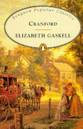
Cranford by Elizabeth Gaskell

After having watched, and loved, the BBC series with Judy Dench, I really wanted to read this book. Confident that it would at least be a good read, I bought the audio book and put it on my Classics Challenge List. It was indeed a pleasant read, although a bit different from the series. I have since learned, however, that the series was based on three novella, Cranford, My Lady Ludlow and Mrs. Harrison’s confessions, so there’s another two for me to add to my list.

Mary Smith, a friend of the family, frequently goes to stay with the Jenkyns’ sisters and on those occasions, writes her observations about the town of Cranford and its inhabitants in her journal. She describes Cranford as a town ruled by women which never changes as to its habits and ways. The ladies of the town like to keep change to a minimum, and while their lives aren’t exciting, they live a pleasant life and entertain themselves with the antics of their neighbours. In this way, they seem to be a lot more content with life than many others. Having said that, it’s worth mentioning that these women belong to the upper-middle class and although they aren’t wealthy enough to disregard money, they don’t have to worry about their existence and thus have little impetus to change. They can afford to live slow, pleasant lives. That’s not to say that they don’t have troubles, because they do, but even then, the ladies fight back in a very unexpected and touching manner.

At first it bothered me that there was no real central theme or story line to the novel, the writing style is pleasant and it flows. The town also provides enough in the way of mishaps and secrets revealed to hold the interest. Additionally, the characters are well structured and realistic both in personal attributes and actions. It makes for quite a good mix and a nice read. These are people you’d want to meet in real life; people who make the world a better place to live in, despite their pre-occupation with status. Gaskell portrays their emotions well, without ever actually telling us how they feel, by intimating their feeling through small motions and reactions, like the turn of a head, the aversion of a gaze, the change tactful change of topics of conversation. Their actions do speak louder than their words.

Although the book is totally different to the series I love, it’s still very good. 5 out of 5 for a pleasant read.

Challenges:
Classics Challenge 2010
Typically British Challenge

Thursday, 15 April 2010

The Woman in White by Wilkie Collins

This is the first of my Classics Challenge 2010 books. I had tried to read it before, but didn’t care for the style of writing and gave it up, despite having heard how good it was. This time I went for the audio addition, as they are usually easier for me to get through when I have problems actually reading a book. Sometimes the narrator can bring a book to life where my own imagination failed. Unfortunately, this wasn’t one of those times. The narrator, Gabriel Woolf, interpreted the book in the same way I did and the narration remained languid, wordy and soporific. I can’t fault the narrator for this, however, as it is really the way the book was written and trying to invigorate it would be forcing something on the book that isn’t there in the first place. This book just sounds much more exciting than it really is.

Walter Hartright, a poor drawing master, secures a place at Limmeridge House teaching the young Laura Fairlie how to draw. Upon his arrival at Limmerage, Hartright meets a young woman dressed in white who is fleeing from a sanatorium where she says she is being kept unjustly because of what she knows. Hartright helps her escape and then immediately becomes interested in this woman and her connections with Limmerage. With the help of Marion Halcombe, Laura Fairlie’s half-sister, he endeavours to find out more about this mysterious woman. Unfortunately, Hartright falls in love with Laura, and she with him, before he has much of a chance to find out more. Their relationship is, however, doomed before it even began. Hartright is penniless and Laura has been promised to Sir Percival Clyde from a young age. Clyde was her father’s favourite as a husband for her daughter and she feels bound to marry him. However, from the very beginning, the worst is feared about Clyde. Although he seems to be perfectly honest and upright in his dealings, one has the suspicion that his intentions towards Laura aren’t truly honourable and that he is really only marrying her for her money. Indeed, the woman in white writes a letter to Laura saying as much and intimating that she should look into her husband’s affairs well before coming to a final decision regarding her marriage. Unfortunately, the only person in a real position to help and defend her is Mr. Hartright who has, in the meantime, left England for South America in a bid to forget Laura. Her half-sister Marion, who is like a sister to Laura, does her best but as a woman without means is unable to exert much influence and must resort to subtle tactics in order to protect Laura.

As the novel progresses, it turns into something of a chess match between Miss Halcombe and Clyde’s closest friend, Count Fosco. Marion knows Fosco is the brains behind the whole operation and she tries to counter him at every step. For every action, there is a reaction. Fosco himself seems to enjoy the game they are playing and decries Halcombe as a treacherous, but very worthy, opponent. His admiration of her earns him no favour with her though and she continues to attack and counter attack him as vigorously as ever.

Like I said before, this book sounds much more exciting than it really is. Collins’ verbosity undoes everything his plot and characters manage to achieve. It takes him much too long to get to where he’s going and most of the time my attention flagged before he finally got there. I’m afraid I won’t be rushing out to buy any more of Collins’ books. This one rates 3 out of 5.

Challenges:
Classics Challenge 2010
Typically British Challenge

Thursday, 4 March 2010

Classics Challenge 2010 Reading List

I’ve needed to get my reading list out for the Classics Challenge 2010 for a while now. I’ve been saving up my classics for this, especially since I’m going for the Classics Feast. Some of them I’m dreading, some I’m looking forward to. I’m sure I’ll pick up a few more on the way too. Plus, I still need to decide on a Future Classic. Ooo! I see The Name of the Rose is on the list. I think I might just read that. I liked the movie and books are usually better, plus I love mysteries, so there you go! Almost feels like cheating.

I’m looking forward to reading:
Tristram Shandy – Laurence Sterne
Cranford – Elizabeth Gaskell
The Woman in White – Wilkie Collins
Our Mutual Friend – Charles Dickens
A Room With a View – E.M. Forster
The Voyage Out – Virginia Woolf
The Name of the Rose – Umberto Eco

Neutral/have no idea how they will be:
The Mayor of Casterbridge – Thomas Hardy
The Idiot – Fyodor Dostoevsky
The Death of Ivan Ilyich – Leo Tolstoy

Am dreading:
The Old Curiosity Shop – Charles Dickens (this one is an audio book which is inexplicably narrated by an American. It just doesn’t seem right somehow.)
Dombey and Son – Charles Dickens (Another audiobook. I didn’t realize this one was narrated by my all time least favourite narrator Fredrick Davidson. The man recorded under several names and I didn’t realize it was him until it was too late. I’ll be listening to this one on fast mode to compensate for the over-exaggerated drawl the drives me up a pole.)
Crime and Punishment - Fyodor Dostoevsky (I tried to watch the movie once and it was really dreadful, in the sense of the story being fairly horrifying. I’ll be saving a cheerful book as a treat for finishing this.)

Repeat:
Bleak House – Charles Dickens

Finally, I’d also like to nominate Good Omens by Terry Pratchett and Neil Gaimen as a new classic. It’s such a good book. I’ll be reading this one too, regardless of counting or not counting. I might even use it as my treat after Crime and Punishment.

The Classics Challenge runs from April 1st to Sept. 30th, so you still have plenty of time to sign up and participate!